
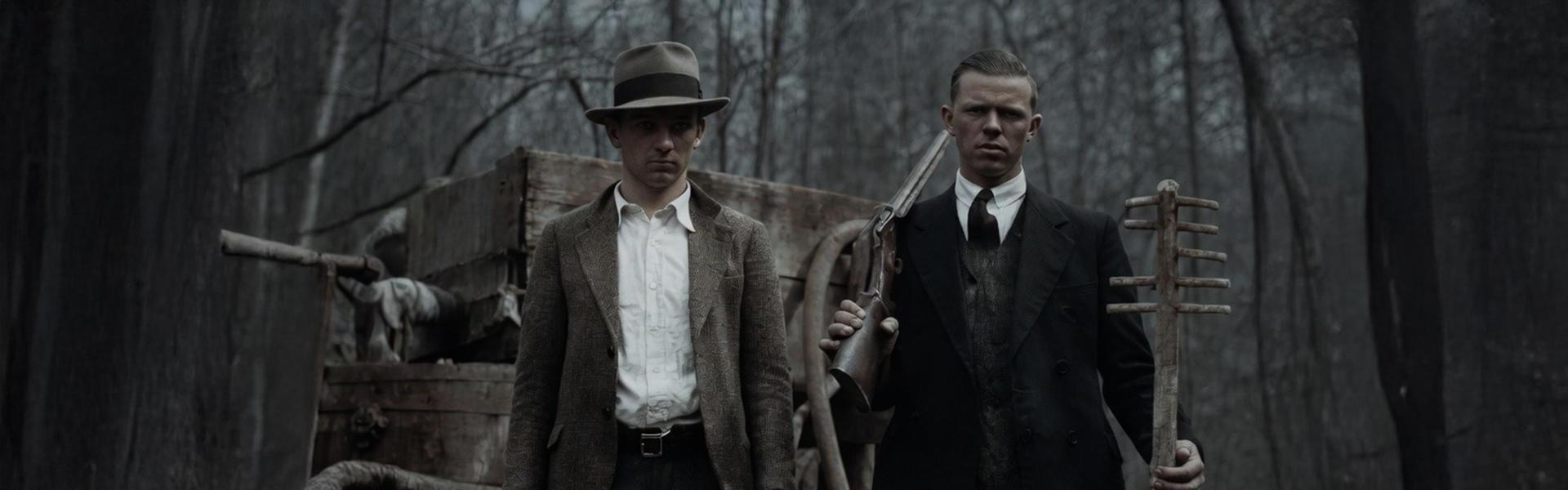
BLOOD IN THE HOLLERS
How Government Oppression Forged Kentucky Moonshine Rebels
At Uncle Boojie’s Distilling Co., our story isn’t just about bourbon. It’s about betrayal, blood, and unbreakable defiance. It’s the raw, unfiltered tale of Scotch-Irish settlers in Howardstown and the Rolling Fork River bottoms—proud, self-reliant families who turned surplus grain into whiskey the way their forebears had for generations. Whiskey wasn’t vice; it was medicine, barter, currency, and the heartbeat of mountain life. These were hardworking people on land their ancestors had carved out after the Revolution, raising children, building communities, and living free. They never asked for war with their own government. All they wanted was to be left alone.
But Washington decided their way of life was no longer acceptable. With the stroke of a pen in 1862, honest mountain men became criminals overnight. What had been perfectly legal suddenly carried the threat of prison, ruin, and death. The federal government’s Revenue Act imposed excise taxes on distilled spirits to fund the Civil War—starting at $0.20 per proof gallon, then skyrocketing to $0.60 in 1864, $1.50 later that year, and $2.00 by 1865. Legal whiskey prices exploded from about 19 cents per gallon pre-war to nearly $2. For cash-poor farmers far from urban centers, compliance was impossible. Federal courthouses were days away by horseback. Bonding requirements for aging whiskey favored only the wealthy. The taxman didn’t just demand money—he demanded surrender.
Federal Spirits Tax
$0.20
1862
$0.60
Early 1864
$1.50
Late 1864
$2.00
1865
Excise tax per proof gallon
Post-war, the oppression continued and worsened. Taxes fluctuated like a noose tightening and loosening at Washington’s whim: a temporary drop to $0.50 per proof gallon in 1868 with longer bonding periods, then climbing again to $0.70 in 1872, $0.90 by 1875, and $1.10 in 1894. These policies protected big commercial interests while crushing family operations in places like Nelson County. Historian Bruce E. Stewart documents how urban newspapers—especially Northern ones—painted mountain distillers as ignorant primitives, backward obstacles to “progress.” This propaganda justified intervention, portraying proud Kentuckians as too uncivilized to manage their own affairs. The term “moonshiner” became a mocking slur, weaponized to discredit honest producers who worked by the light of the moon to survive. Reformers and do-gooders declared that mountain culture itself had to be civilized—essentially, to “beat the mountains out of these folks.”
And they tried. Mercilessly.
U.S. Marshals and revenue agents swept through the hollers like an occupying army. Stills were smashed with glee. Property was confiscated. Men were dragged from their homes in chains while wives and children watched in horror. Proud mountain fathers—men who had never broken a law in their lives—were paraded through towns like common thieves, humiliated before strangers, then shipped to distant prisons for years. While those fathers sat in cold cells wondering if they’d ever see their families again, the government auctioned off their farms. Women and children were thrown out with nothing but the clothes on their backs. Destitute. Starving. Hopeless.
Still, that wasn’t enough.
The government looked at grieving widows and declared them unfit mothers. They ripped screaming children from their mothers’ arms—little boys and girls crying for their mamas as they were carried away forever. These children were sent to orphanages and often placed on display like livestock, inspected and chosen by strangers for child labor on distant farms. All because their families dared to live as their people always had. This wasn’t taxation. This wasn’t law enforcement. This was a calculated campaign to break an entire culture— to beat the mountains out of them—one destroyed still, one stolen farm, one shattered family at a time.
Kentucky’s 1874 Local Option Law poured fuel on the fire. Religious temperance groups pushed communities to vote themselves “dry.” By 1906, more than half of the state’s 120 counties had done so, creating a chaotic patchwork of wet, dry, and “moist” zones that further criminalized tradition and inflated the underground economy. Each new prohibition measure was sold as moral uplift, but it was cultural erasure by outsiders who could never understand the hills.
This escalating war birthed the Moonshine Wars—roughly 1872 to 1950. Violence erupted across Appalachian Kentucky, West Virginia, North Carolina, and Tennessee. Ambush attacks and tragic shootouts claimed lives on all sides. Marshals died. Moonshiners died. But the root cause was federal policies that turned peaceful distillers into outlaws. For families along the Rolling Fork River and in communities like Howardstown, remitting taxes at distant courthouses was impractical. Enforcement raids destroyed stills, seized land, and jailed men, only increasing the value and allure of illegal whiskey—prices reaching $30 per gallon in 1924. A culture of fierce independence was forged in the fire of resistance.
The ultimate betrayal came with national Prohibition in 1920. After decades of taxing their product, the government banned it entirely under the 18th Amendment and Volstead Act. The result was disaster. Legitimate, experienced distillers were driven underground or out of business. Demand didn’t vanish—it exploded. Moonshine prices soared to $25–$30 per gallon in the early 1920s. The black market boomed, and the human cost was horrific.
Prohibition didn’t just restrict alcohol; it poisoned a nation.
Desperate consumers turned to whatever they could find:
Jamaica Ginger (“Jake”) Poisoning
Legal patent medicines with high alcohol content were adulterated with toxic chemicals like tri-ortho-cresyl phosphate (TOCP) to dodge audits. Tens of thousands suffered “jake leg”—permanent nerve damage causing a shuffling, high-stepping gait. Blues songs like the Allen Brothers’ “Jake Walk Blues” captured the agony: “I can’t eat, I can’t talk / Been drinkin’ mean jake, Lord, now I can’t walk.”
Denatured Industrial Alcohol
The government deliberately poisoned industrial alcohol with methanol and other toxins, knowing bootleggers and the poor would redistill and drink it. In New York City alone in 1926, there were 1,200 poisoning cases and 400 deaths. Nationwide, estimates of government-sanctioned denaturing deaths reached into the thousands—blindness, organ failure, paralysis. Medical examiner Charles Norris called it state-sponsored poisoning that hit the poor hardest.
Rotgut Moonshine
Makeshift stills using lead-lined car radiators leached heavy metals. Toxic additives created deadly batches causing thousands more deaths and lifelong suffering. Amateurs and profiteers filled the void left by legitimate producers.
These tragedies were the direct, predictable consequence of arrogant top-down control by those who believed they knew better than the people in the hills. It took the 1938 Food, Drug, and Cosmetic Act to begin addressing the chaos. The human toll in Kentucky’s hollows remains a stark warning against government overreach.
Yet through it all, the mountain spirit could not be broken. The hardworking families of Howardstown and the Rolling Fork River bottoms preserved their recipes, their knowledge, and their defiance. They passed down the heritage in secret, through generations, refusing to let outsiders extinguish the fire. They were born fighting, bound by unbreakable kinship. No matter how much the government took—stills, land, men, children, even lives—they could not break us.
That same fire runs through the soul of Uncle Boojie’s Distilling Co. Every bottle we produce carries the blood, the pain, and the defiance of those who came before. Their suffering is in our veins. Their fight still burns in our hearts.
This isn’t just bourbon.
This is memory. This is revenge.
This is legacy.
We honor it today by producing authentic Kentucky Straight Bourbon Whiskey legally, transparently, and with profound reverence—no government overreach, no outsider dictates, just honest spirits made by people who understand and respect the mountains.
When you raise a glass of Uncle Boojie’s, you are not only enjoying exceptional bourbon. You are honoring the men, women, and children who endured raids, taxes, smears, seizures, imprisonment, family destruction, and poison yet kept the flame of independence alive. You are toasting the hardworking distillers who fought the taxman and the do-gooders, refusing to let anyone beat the mountains out of them.
In an age when centralized power once again seeks to control how people live, work, and preserve their traditions, the story of Kentucky’s hill families remains painfully relevant. Their defiance reminds us that heritage, self-reliance, and the right to live on your own terms are worth fighting for. The mountain people never surrendered. Neither will we.
— Stephen A. Smith, Founder, Uncle Boojie’s Distilling Co.